I got back from my yearly meeting (SAYMA) last night. I am still rather tired physically, but spiritually refreshed. This was Ceal's last year as registrar, which kept us both pretty busy, her much more than me. Having been enmeshed in several blog discussions, and lately worshipping with a more Christocentric group, I was a little curious as to what my reaction would be to the various goings-on at SAYMA. I worried that I might not have patience for things that I think are out of place, or are over-emphasized. As it happened, this was probably my favorite year at SAYMA so far. I have become acquainted with quite a few Friends, and I would estimate that during Meeting for Business, I could name more than half the Friends present. It was so wonderful to see everyone, to greet them, to worship with them and enjoy our time together. Although I am usually an introverted person, I took great delight in saying hello to so many people. Perhaps one day I will be like that all the time.
I feel like there are wisps of ideas running through my head, that I am trying to snag and bring forth here. In the next few days, I hope to be able to write more about SAYMA (and maybe provide a picture or two).
Monday, June 12, 2006

Tuesday, May 9, 2006
The Story of Jesus of Valdosta
I discovered today that the Cotton Patch Gospel is now available online. If you have never heard of the Cotton Patch Gospel, it was written by Clarence Jordan, a southern minister who also started an intentional community called Koinonia Farm in the 1940's, and underwent a lot of persecution because Koinonia Farm was a community of both blacks and whites. A Koinonia Farms project to build houses for poor people in Americus, Georgia was a precursor to Habitat for Humanity (Millard Fuller, the founder of Habitat, ran the Koinonia Partnership Housing project for its first few years).
When I first read parts of the Cotton Patch Gospel, I was a little put off by it. Clarence Jordan has torn the New Testament from its first century Palestine roots and plopped it down into mid-20th century Georgia. I used to think it was just quaint, but I have come to the understanding that it is trying to give you a story you can relate to better. You might be able to picture people and places better when their names are familiar. It isn't just giving things different names, he changes some of the situations. In the letters of Paul, where he had been talking about circumcision and the inclusion of Gentiles in the church, in the CPG, he is talking about segregation and churches that include both blacks and whites.
One of the things that was changed that seems a little harder to get used to is that Jesus was lynched. Instead of the cross, Paul talks about the noose. For example, this is an excerpt from the 1st Letter to the Christians in Atlanta (the modern-day Corinth):
I just love the part about tearing to bits the dissertations of the Ph.D's, it is quite a vivid image. The original was something to the effect of "I will destroy the wisdom of the wise".
When you read the CPG version of Matthew, however, Jesus was crucified. Matthew was a later work for Jordan, so perhaps he was also not as comfortable with the idea of a noose instead of a cross. Even if you don't enjoy the Cotton Patch Gospel, it is instructive and inspiring to read about its author. You can find out more about Clarence and Koinonia Partners at the Koinonia Partners web site.
When I first read parts of the Cotton Patch Gospel, I was a little put off by it. Clarence Jordan has torn the New Testament from its first century Palestine roots and plopped it down into mid-20th century Georgia. I used to think it was just quaint, but I have come to the understanding that it is trying to give you a story you can relate to better. You might be able to picture people and places better when their names are familiar. It isn't just giving things different names, he changes some of the situations. In the letters of Paul, where he had been talking about circumcision and the inclusion of Gentiles in the church, in the CPG, he is talking about segregation and churches that include both blacks and whites.
One of the things that was changed that seems a little harder to get used to is that Jesus was lynched. Instead of the cross, Paul talks about the noose. For example, this is an excerpt from the 1st Letter to the Christians in Atlanta (the modern-day Corinth):
To the so-called "practical" people, the idea of the noose is a lot of silly talk, but to those of us who have been let in on its meaning, it is the source of divine power. It’s just like the Scripture says:
I will tear to bits the dissertations of the Ph.D’s;
I will pull the rug from under those who have all the answers.
I just love the part about tearing to bits the dissertations of the Ph.D's, it is quite a vivid image. The original was something to the effect of "I will destroy the wisdom of the wise".
When you read the CPG version of Matthew, however, Jesus was crucified. Matthew was a later work for Jordan, so perhaps he was also not as comfortable with the idea of a noose instead of a cross. Even if you don't enjoy the Cotton Patch Gospel, it is instructive and inspiring to read about its author. You can find out more about Clarence and Koinonia Partners at the Koinonia Partners web site.
Friday, April 28, 2006
Glossolalia
When Marcus Borg writes about Christianity, he often uses Quakers and Pentecostals to describe opposite ends of the spectrum of worship. When I was younger, I spent my summers with my grandparents who attended an Assembly of God (Pentecostal) church. Thus, I am blessed to have experienced both ends of the spectrum (some of my in-between experiences are rather amusing as well, like the time I was about 9 and discovered only after a really huge gulp from the cup that Episcopalians use real wine instead of grape juice for communion). During my time at this church, I had occasion to witness some interesting things like "being slain in the spirit" and glossolalia (a.k.a. speaking in tongues).
Speaking in tongues is an interesting thing to me. I have never done it, neither have my grandparents. I read an article on bible.org a while back (I can't find it now), by a minister who has never spoken in tongues, and was rejected by some churches because of it. That article was brought to mind last week when I was reading 1 Corinthians, where Paul says in chapter 12:
So basically, he has outlined the various spiritual gifts. Later in chapter 14, he says:
At first, this grabbed me because it suggested that putting undue emphasis on speaking in tongues was probably harmful, and also expecting everyone to have that particular gift was not in keeping with Paul's understanding of the gifts. But then, I was struck even more by the realization that Meeting for Worship is essentially all of us getting together to exercise the gift of prophecy. It is amusing to consider what some of the reactions would be to someone speaking in tongues during Meeting for Worship, yet we are really just exercising a different gift - and aren't we also ignoring the possibility that not everyone is given the gift of prophecy? It seems to me that in Meeting for Worship for Healing, we are trying to exercise the gift of healing, and I have felt very strong indications of that gift occasionally during these meetings - much more often than I have felt the gift of prophecy (interestingly, I feel some of the same physical effects from both).
I found a pamphlet on Prophetic Ministry by Howard Brinton that did equate at least early Quaker worship with the gift of prophecy. It is an interesting overview of what happened to prophetic ministry, and suggests reasons why ministry today doesn't always seem very prophetic.
Given QuakerK's recent comparison/contrast between Quakerism & Evangelicalism, perhaps we should also compare it to the Charismatic movement.
Speaking in tongues is an interesting thing to me. I have never done it, neither have my grandparents. I read an article on bible.org a while back (I can't find it now), by a minister who has never spoken in tongues, and was rejected by some churches because of it. That article was brought to mind last week when I was reading 1 Corinthians, where Paul says in chapter 12:
Now there are different gifts, but the same Spirit. And there are different ministries, but the same Lord. And there are different results, but the same God who produces all of them in everyone. To each person the manifestation of the Spirit is given for the benefit of all. For one person is given through the Spirit the message of wisdom, and another the message of knowledge according to the same Spirit, to another faith by the same Spirit, and to another gifts of healing by the one Spirit, to another performance of miracles, to another prophecy, and to another discernment of spirits, to another different kinds of tongues, and to another the interpretation of tongues. It is one and the same Spirit, distributing as he decides to each person, who produces all these things. (NET Bible)
So basically, he has outlined the various spiritual gifts. Later in chapter 14, he says:
Pursue love and be eager for the spiritual gifts, especially that you may prophesy. For the one speaking in a tongue does not speak to people but to God, for no one understands; he is speaking mysteries by the Spirit. But the one who prophesies speaks to people for their strengthening, encouragement, and consolation. The one who speaks in a tongue builds himself up, but the one who prophesies builds up the church. I wish you all spoke in tongues, but even more that you would prophesy. The one who prophesies is greater than the one who speaks in tongues, unless he interprets so that the church may be strengthened. (NET Bible)
At first, this grabbed me because it suggested that putting undue emphasis on speaking in tongues was probably harmful, and also expecting everyone to have that particular gift was not in keeping with Paul's understanding of the gifts. But then, I was struck even more by the realization that Meeting for Worship is essentially all of us getting together to exercise the gift of prophecy. It is amusing to consider what some of the reactions would be to someone speaking in tongues during Meeting for Worship, yet we are really just exercising a different gift - and aren't we also ignoring the possibility that not everyone is given the gift of prophecy? It seems to me that in Meeting for Worship for Healing, we are trying to exercise the gift of healing, and I have felt very strong indications of that gift occasionally during these meetings - much more often than I have felt the gift of prophecy (interestingly, I feel some of the same physical effects from both).
I found a pamphlet on Prophetic Ministry by Howard Brinton that did equate at least early Quaker worship with the gift of prophecy. It is an interesting overview of what happened to prophetic ministry, and suggests reasons why ministry today doesn't always seem very prophetic.
Given QuakerK's recent comparison/contrast between Quakerism & Evangelicalism, perhaps we should also compare it to the Charismatic movement.
Sunday, April 2, 2006
"F The President" ?
There was a big peace march & rally here in Atlanta over the weekend, and a number of people parked at the Atlanta Friends Meetinghouse and carpooled to the rally. Ceal and I had to go by the meetinghouse in the afternoon and I saw a car with a small, square black sticker that said "F the President". At times I have seen similar things like "Muggles for Bush", "W Is Not The Answer", and much worse. Even in Meeting for Worship there are also occasional snide remarks about Bush and Cheney. I have been guilty of this myself, not in Meeting for Worship, but in my daily conduct. This is not a practice of love, is not what Jesus calls us to do.
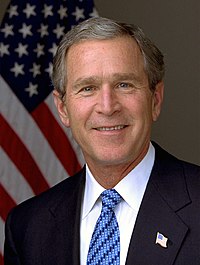


Look at these pictures. Can you love these people, hold them in the light, and pray that God will bless them? Our peace witness comes from the commandment to love our neighbor as ourself, not out of some duty to "do the right thing". Loving someone doesn't mean we have to agree with them, but it does mean that we treat them with respect and dignity, and do not make fun of them.
When I first started attending meeting, a dear woman named Jane Wellborn would ask us to hold in the light George W. Bush, his Cabinet, Osama Bin Laden, Saddam Hussein, and various others. This was a little more than a year after 9/11 and I had some difficulty with holding Osama Bin Laden in the light, and I will admit some difficulty with the others as well. I am so very grateful for Jane's witness, which continues today, and I look forward to her constant reminders.
Look at these pictures. Can you love these people, hold them in the light, and pray that God will bless them? Our peace witness comes from the commandment to love our neighbor as ourself, not out of some duty to "do the right thing". Loving someone doesn't mean we have to agree with them, but it does mean that we treat them with respect and dignity, and do not make fun of them.
When I first started attending meeting, a dear woman named Jane Wellborn would ask us to hold in the light George W. Bush, his Cabinet, Osama Bin Laden, Saddam Hussein, and various others. This was a little more than a year after 9/11 and I had some difficulty with holding Osama Bin Laden in the light, and I will admit some difficulty with the others as well. I am so very grateful for Jane's witness, which continues today, and I look forward to her constant reminders.
Thursday, March 16, 2006
George's Car
Once a man named George was walking along a road with his friends and came to a rusted old truck. They tried driving the truck, but it wouldn't move because parts of it had gotten wedged into the road and into other parts of the truck. With some patience and work, George and his friends removed the parts that were in the way, and soon they had a simple, flatbed truck that took them all over the place, and anyone could ride on it.
After a long while, people began to ride the truck not because it got them anywhere, but because they liked the idea that anyone could ride on the truck. Some people who liked to fly added wings to it. Then someone who liked boating replaced the steering wheel with a rudder. A skier replaced two of the wheels with skis, while a biker installed a bike wheel. Pretty soon, the truck was such a mixture of all kinds of vehicles that no one could even describe it. And it never went anywhere.
After a long while, people began to ride the truck not because it got them anywhere, but because they liked the idea that anyone could ride on the truck. Some people who liked to fly added wings to it. Then someone who liked boating replaced the steering wheel with a rudder. A skier replaced two of the wheels with skis, while a biker installed a bike wheel. Pretty soon, the truck was such a mixture of all kinds of vehicles that no one could even describe it. And it never went anywhere.
Tuesday, March 7, 2006
A little bit of Rilke
I have been reading the poetry of Rainer Maria Rilke lately. The German is just beautiful. I haven't really found an English translation that captures enough of the feel of it, so I naively decided to give it a try myself. I wanted to try to preserve the rhyming scheme and meter as well as the meaning, because Rilke fits them together so well.
I started with The Book of Hours (Das Stundenbuch) and translated the first two poems. The first, in German, is:
And here is my translation:
The second poem is pretty well-known. Again, the German version:
And here is my translation:
I started with The Book of Hours (Das Stundenbuch) and translated the first two poems. The first, in German, is:
Da neigt sich die Stunde und rührt mich an
Da neigt sich die Stunde und rührt mich an
mit klarem, metallenem Schlag:
mir zittern die Sinne. Ich fühle: ich kann -
und ich fasse den plastischen Tag.
Nichts war noch vollendet, eh ich es erschaut,
ein jedes Werden stand still.
Meine Blicke sind reif, und wie eine Braut
kommt jedem das Ding, das er will.
Nichts ist mir zu klein, und ich lieb es trotzdem
und mal es auf Goldgrund und groß
und halte es hoch, und ich weiß nicht wem
löst es die Seele los...
And here is my translation:
The clock strikes the hour and stirs me awake
The clock strikes the hour and stirs me awake
with a clear, metallic chime:
my senses now quiver. I feel: I'm able -
and I seize the moldable day
Not a thing is completed outside of my sight
and things yet forming stand still
my vision is ripe, and like a bride in white
receives everything in its will
Nothing is too small to me, and I love it still
and I paint it large and in gold
and I hold it high, and know not for whom
it will cause the soul's wings to unfold
The second poem is pretty well-known. Again, the German version:
Ich lebe mein Leben in wachsenden Ringen
Ich lebe mein Leben in wachsenden Ringen,
die sich über die Dinge ziehn.
Ich werde den letzten vielleicht nicht vollbringen,
aber versuchen will ich ihn.
Ich kreise um Gott, um den uralten Turm,
und ich kreise jahrtausendelang;
und ich weiß noch nicht: bin ich ein Falke, ein Sturm
oder ein großer Gesang.
And here is my translation:
I live my life in widening rings
I live my life in widening rings
That spread themselves over all
I may not complete the last of these things
But to journey is my call
I circle round God, the most ancient form
My journey a thousand years long
Yet still I don't know: Am I a falcon? a storm?
Or part of a much larger song.
Tuesday, January 31, 2006
Do you solemnly swear... ?
I have been thinking lately about Jesus' admonition in Matthew 5 about not swearing oaths, and the extent to which Quakers take it. The NET Bible version of this passage is:
To me, it seems to me that Jesus is speaking about telling the truth, and having to use an oath to say "This time I really *am* telling the truth". The problem I have is that we use oaths for more widespread uses than just "I am telling the truth." For example, if you participate on a jury in Dekalb County, Georgia, you take an oath. You are not swearing to tell the truth, you are swearing that you will listen to the testimony and put all prejudice aside. Now, if this oath ends with "so help me God", then I think it definitely conflicts with Jesus' admonition, but what if it doesn't?
When a witness is sworn in, he or she is asked to raise their right hand, and then asked "Do you swear or affirm that the testimony you give is the truth" with no "so help you God" at the end. That seems a little gray to me.
What about the oath of office for an elected official? Here is the U.S. Presidential Oath of Office as specified by Article II, Section I of the Constitution (which calls it an "Oath or Affirmation"):
There is nothing that says you have to raise your hand or place it on the bible (there's an irony!). Would that make a difference? I was a little curious to see if either of the two Quaker presidents (Hoover & Nixon) opted for "affirm" instead of "swear". Interestingly, Hoover opted for "affirm" and was the second president to do so. Franklin Pierce was the first.
The reason this gives me such trouble is that once you get out of the realm of oaths as a statement of "I am telling the truth", it is hard for me to distinguish between that and a verbal contract. As far as I know, Quaker's don't have a problem with entering into contracts, so I am wondering what guidelines to use.
It feels to me like placing your hand on the Bible or saying "so help me God" is definitely out, but I am a little unsure about the phrase "do you swear". I think that even if the oath begins with "do you swear or affirm", if it ends with "so help me God" then it would still be the kind oath that Jesus is talking about. In fact, I think that if it is any promise that "*this time* I will behave differently than I have in the past" then it seems to be wrong. When it is a declaration that one understands and will follow the expected procedures, it seems more like a verbal contract than an oath, regardless of whether it is called an oath.
5:33 “Again, you have heard that it was said to an older generation, ‘Do not break an oath, but fulfill your vows to the Lord.’ 5:34 But I say to you, do not take oaths at all – not by heaven, because it is the throne of God, 5:35 not by earth, because it is his footstool, and not by Jerusalem, because it is the city of the great King. 5:36 Do not take an oath by your head, because you are not able to make one hair white or black. 5:37 Let your word be ‘Yes, yes’ or ‘No, no.’ More than this is from the evil one.
To me, it seems to me that Jesus is speaking about telling the truth, and having to use an oath to say "This time I really *am* telling the truth". The problem I have is that we use oaths for more widespread uses than just "I am telling the truth." For example, if you participate on a jury in Dekalb County, Georgia, you take an oath. You are not swearing to tell the truth, you are swearing that you will listen to the testimony and put all prejudice aside. Now, if this oath ends with "so help me God", then I think it definitely conflicts with Jesus' admonition, but what if it doesn't?
When a witness is sworn in, he or she is asked to raise their right hand, and then asked "Do you swear or affirm that the testimony you give is the truth" with no "so help you God" at the end. That seems a little gray to me.
What about the oath of office for an elected official? Here is the U.S. Presidential Oath of Office as specified by Article II, Section I of the Constitution (which calls it an "Oath or Affirmation"):
"I do solemnly swear (or affirm) that I will faithfully execute the office of President of the United States, and will to the best of my ability, preserve, protect and defend the Constitution of the United States."
There is nothing that says you have to raise your hand or place it on the bible (there's an irony!). Would that make a difference? I was a little curious to see if either of the two Quaker presidents (Hoover & Nixon) opted for "affirm" instead of "swear". Interestingly, Hoover opted for "affirm" and was the second president to do so. Franklin Pierce was the first.
The reason this gives me such trouble is that once you get out of the realm of oaths as a statement of "I am telling the truth", it is hard for me to distinguish between that and a verbal contract. As far as I know, Quaker's don't have a problem with entering into contracts, so I am wondering what guidelines to use.
It feels to me like placing your hand on the Bible or saying "so help me God" is definitely out, but I am a little unsure about the phrase "do you swear". I think that even if the oath begins with "do you swear or affirm", if it ends with "so help me God" then it would still be the kind oath that Jesus is talking about. In fact, I think that if it is any promise that "*this time* I will behave differently than I have in the past" then it seems to be wrong. When it is a declaration that one understands and will follow the expected procedures, it seems more like a verbal contract than an oath, regardless of whether it is called an oath.
Subscribe to:
Posts (Atom)